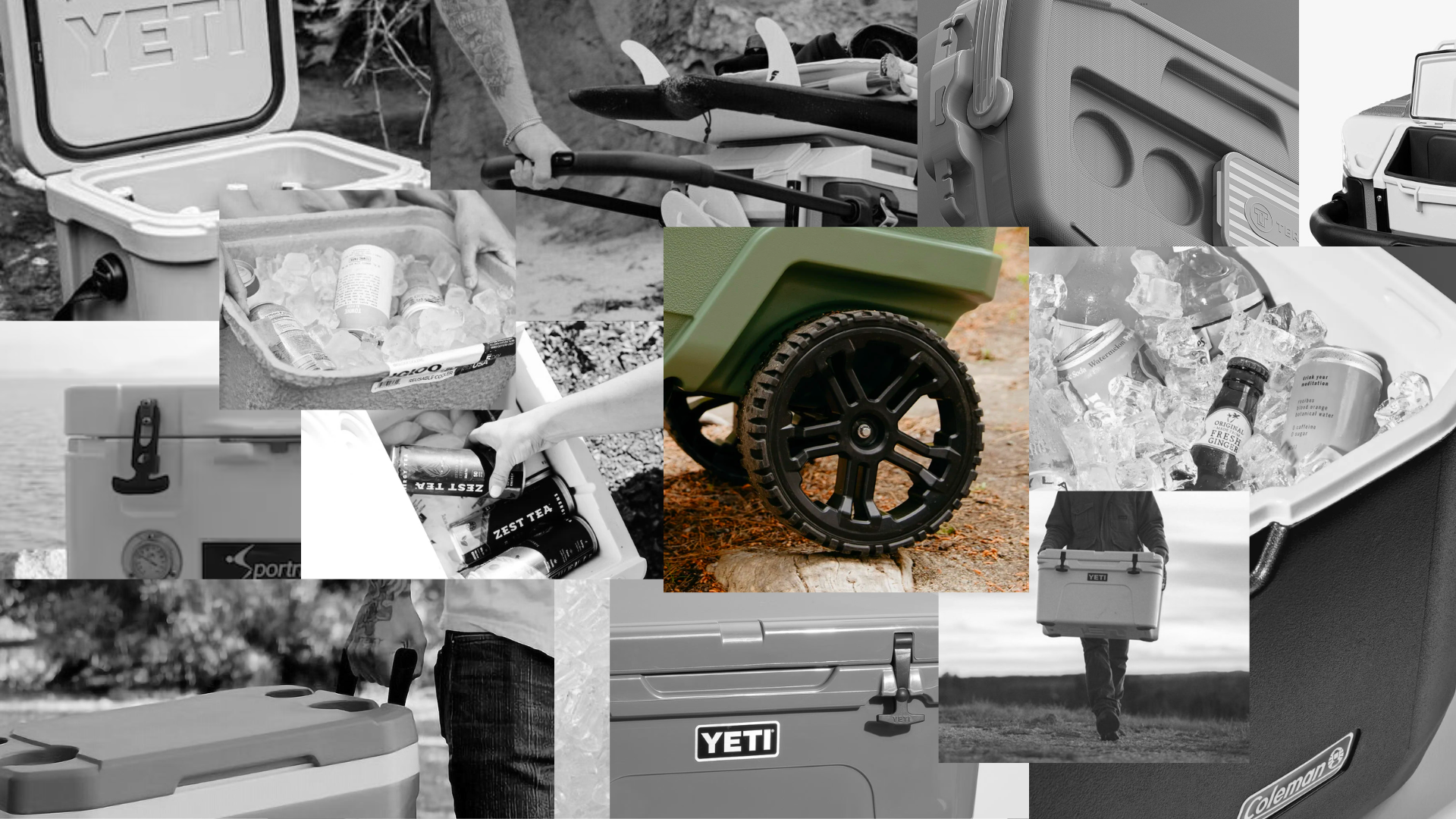
A Case Study: Outdoor Coolers
-
Phase 1: Interview
I Interviewed three users within the age range of 20-50 years old. Through this process I was able to learn what users valued in a potential product and what their common pain points were.
-
Phase 2: Read
I was able to read about the product market, existing technology and engineering, and societal and environmental implications of the product type.
-
Phase 3: Compare
By doing market research, I was able to recognize places where solutions were needed.
-
Phase 4: Analyze
After collecting primary and secondary research, analyzing my findings and gathering insights was crucial to the development of the product and next steps.
-
Phase 5: Propose Solutions
In this phase I began to propose solutions based on the actionable insights identified within the research process.
Interview
I Interviewed three users within the age range of 20-50 years old. Through this process I was able to learn what users valued in a potential product and what their common pain points were.
Beginning the interviews, I learned about each user and their lifestyle, and how this product fits into their lives. I asked the user how they felt about the product, and what needs it meets for them. The interviews were a productive process, with conversation being led by both interviewer and interviewee.
“I find that with most coolers, after I load them up, it’s too heavy to carry to my car.”
-Interviewee 1
Interviewee 1 was a female college student who lives at home with her parents. She has an active lifestyle which consists of hiking, camping, and going for day trips to the lake.
-
Interviewee 1 values functionality in an outdoor cooler. She expressed how important it was for the product to be able to hold all of her drinks and food. She values the price of the cooler due to the fact she is on a budget and prefers to spend less wherever she can.
-
Interviewee 1’s issues with existing coolers were the aspects of portability. When she loads up her current cooler, she finds it difficult to carry it to her car by herself.
-
With every interviewee, I asked them what they would change about current cooler designs. She expressed to me how she dislikes the bulkiness of current designs, and wishes it was easier to get your cooler to where you’re going.
“I wish there was something about my cooler that made me feel like I was making a difference.”
-Interviewee 2
Interviewee 2 is a young professional who works from home, and loves getting outside on the weekends. He enjoys water sports like kayaking and wake boarding.
-
Interviewee 2 values quality time in the outdoors, whether it be on a bike trail or on a boat. He values longevity in a cooler design, and wants something he can keep for a long time.
-
Interviewee 2’s issues with existing coolers were considering the ease of use. He wishes that his current cooler had more handles, and wheels that could handle going over gravel and mud.
-
With every interviewee, I asked them what they would change about current cooler designs. Interviewee 2 expressed that he wishes there was something about his cooler that made him feel like he was making a difference in the world, in the same way a “leave no trace” philosophy applies when hiking.
“The most important thing is how long my stuff stays cold.”
-Interviewee 3
Interviewee 3 is a working professional who enjoys taking day trips to Sedona and hiking around the Phoenix area.
-
Interviewee 3 values quality time with his family, and having the free time to get away and hike in the Sedona red rocks. He expressed that when purchasing a cooler, the most important thing is how long the food and drinks stay cold.
-
Interviewee 3’s issues with current coolers designs were that the handle designs were often too clunky. He wishes ergonomics were a bigger concern.
-
With every interviewee, I asked them what they would change about current cooler designs. Interviewee 3 would change the inner workings of existing coolers to allow for more organization inside.
Observation Ax4
Actors
Young adults
Middle aged adults
Activities
Greet friends
Socialize
Eat food
Grab a drink
Atmosphere
Outdoors
Trunk
Spills
Music
Backyard
Artifacts
Cups
Grass
Car
Temperature
Ice
Article Summaries
Users
What are the existing favorites of users?
Business/Market
What does the market for existing coolers look like?
Technology/Engineering
Society/Environment
Environmentally conscious coolers
How do coolers work?
Read
This resource helps potential users gain insight from what other users think of existing products on the market. It is a beneficial tool for knowing how much each crowd favorite cooler costs, the pros and cons of each, and different sizes available for purchase by the user.
https://www.switchbacktravel.com/best-coolers-ice-chests
This resource provides information about what the market looks like for existing coolers. It provides information about what next steps vendors are taking to improve the technology that is being used in the products. It also analyzes market trends and how new developments have allowed for replacements to be made to outdated products.
https://www.grandviewresearch.com/industry-analysis/camping-cooler-market
This resource explains how coolers use insulation to help slow down the heating process that inevitably takes place inside coolers.
https://www.qualitylogoproducts.com/blog/why-do-coolers-stay-cold-for-so-long/#:~:text=The%20insulation%2C%20which%20is%20usually,through%20a%20process%20called%20convection.
This article dives into moves that Igloo is making to be a more sustainable brand. They launched ECOCOOL, a line of eco-conscious coolers made with fully recyclable and compostable materials.
https://thedieline.com/blog/2021/3/11/the-igloo-ecocool-is-the-first-hardside-cooler-made-with-recycled-plastic?
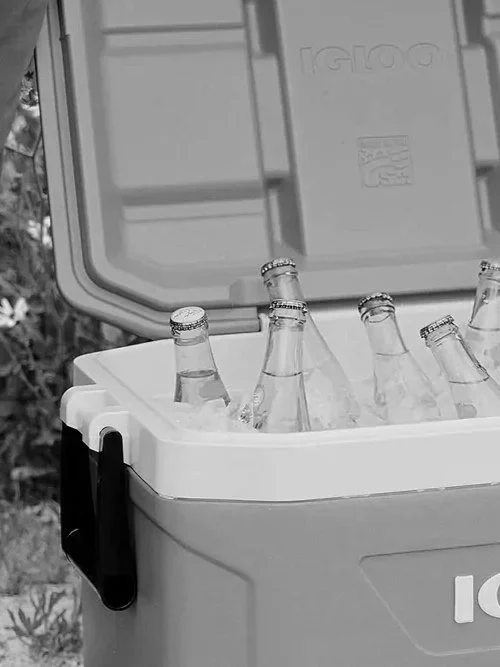
Competitor Benchmarking
-
Lasts for years
Expensive ($375)
Bear-proof
-
Very light
Cheap ($65)
Average ice retention
-
Recycled plastic
Cheap ($50)
Good ice retention
Users and Stakeholders
Users
Young Adult Needs: be able to transport cooler, take into account value for money, ability to not worry about cooler breaking/cracking
Middle-Aged Adult Needs: freedom to use where needed. Something for day trips, or to keep in backyard.
Purchasers
Young Adult Needs: Value for money, cheap, simple
Middle-Aged Adult Needs: Useful features, comfortable handles, better materials
Influencers
Friends & Family Needs: Assurance food and drinks will be kept cool, ability to keep additional food and drink that they bring along
Causes of Stress or Pain
Breakage: cooler cracking, pieces snapping off, unstable handle
Design: Poor handle design causes uncomfortable grip, poor wheel design causes user to exert more energy when transporting
Current Market
-
The market for food and drink coolers is expected to grow with the growing popularity of outdoor recreational activities like grilling, off-roading, and hiking. According to Grand View Research's Market Analysis report, the market for outdoor coolers was reported to be valued at $735.4 million, and is expected to grow 6.1% by 2025.
Current users of outdoor coolers include but are not limited to: parents, college students, single people, coaches, organizations, and children.
-
How might we encourage an active lifestyle through the functionality of outdoor coolers?
How might we make storing food and drinks easier by improving organization inside coolers?
How might we improve existing cooler designs with eco-conscious materials?
-
Competition
With more than 75 brands marketing coolers to consumers, it is a busy market to enter
Technology
With many different material options, it is important to consider what is the most sustainable option to use. By choosing more sustainable materials, there may be trade-offs as to what cooling capabilities the cooler has.
Compare
Analyze
Actionable Insights to Address Going Forward in the Design Process
Durability
Sustainable Materials
Ergonomics
Cooling Capabilities
Ease of Use
Make the product from materials that will be able to withstand weather and things like bumpy car rides, drops, and people sitting on top.
Consider which materials will be the most sustainable to construct the product. Think of design strategies to minimize waste and maximize use. Use materials that will lengthen the lifespan of the product.
Consider ergonomics when designing handles, lid, and thinking about size.
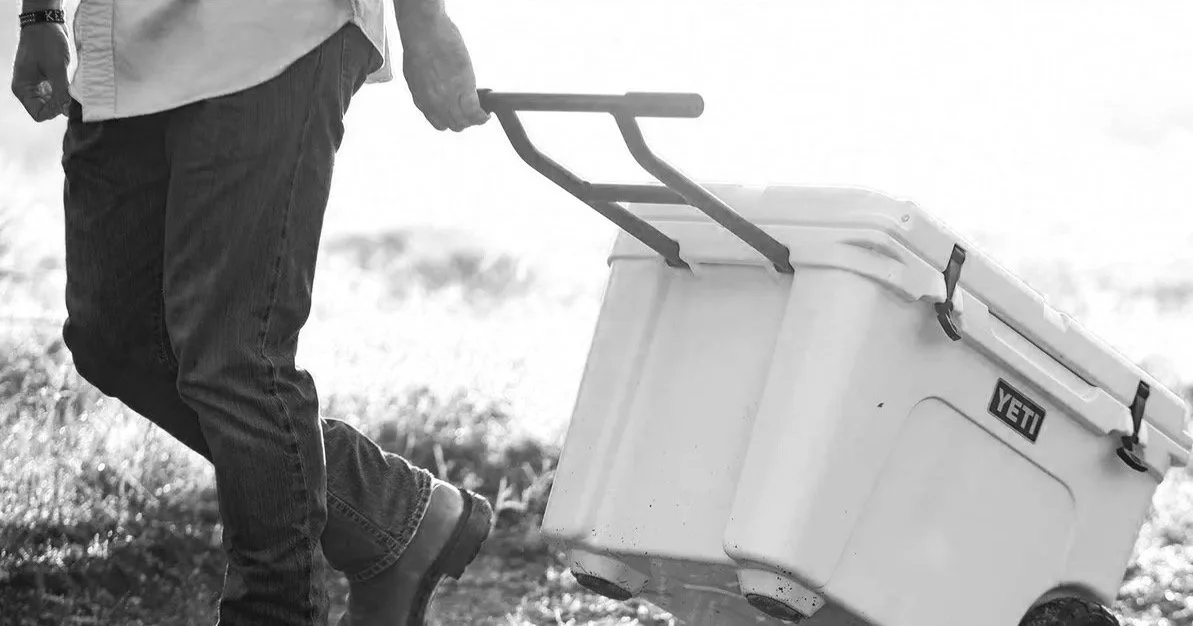
Allow for users to take the cooler wherever they want with ease. Incorporate features like long handle so that users of varying heights and strength can use it.
Incorporate effective cooling technology that is considerate of the user’s needs and the environment.